

|
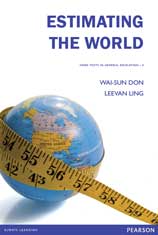
Course Aims: This course begins by introducing the motivations behind why we need to estimate. While simple estimations can be done easily with pen and paper, more complicated ones will require the help of modern computing algorithms. To become proficient in computing, students will learn the differences between familiar mathematical operators (i.e., addition, subtraction, multiplication and division) and operations (i.e. square root and exponential), as well as the corresponding operators and operations built into computers. Equipped with the “computational senses”, students (who are assumed to have no previous exposure to calculus and linear algebra) will be introduced to several carefully selected numerical methods applicable to real-life applications, which are simulated with the aid of the popular mathematical software MATLAB. Similar to how today’s researchers approach research topics and handle newly invented algorithms, we will adopt a step-by-step investigative experimental approach instead of a theoretical one. This course will guide students to experience and understand the essence of estimation via computing by building links to several basic mathematical ideas, such as sequences and limits. Although numerical methods covered in this course are limited, their applications to real-life problems are not. This course aims to transform the next generation of citizens in Hong Kong from a fact-consumer into informed question-asker, with topics such as, “How can I estimate the Gini index for Hong Kong using basic facts and data?”, “How polluted is the air inside the cross harbor tunnel?” and “Taking inflation into account, is the cost of raising a child in Hong Kong really $4 million?” Under this course, logical thinking and scientific reasoning combined with hands-on experiment will allow students to verify the trustworthiness of quantitative estimations reported in the news and its impact on daily life.
|